In the middle of the desert landscapes of Taklamakan, in the northern-west part of China, the province of Xinjiang is the very least populated land while it covers close to a sixth from the country's area. Having resisted during centuries the Han Chinese control, Xinjiang Uyghur Autonomous Region, or Old East Turkestan, fell under the Chinese Han control in 1949. From then, its population is generally Uyghur People and Turkish - speaking System.
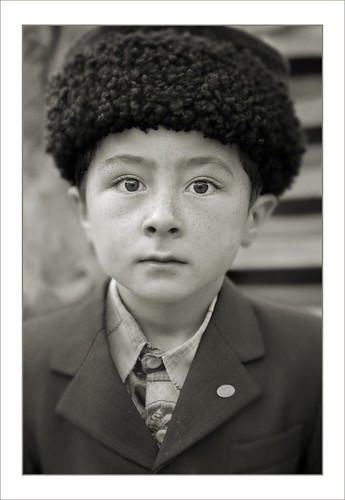
Islamic most importantly, the Uyghur people have a solid religious identity which usually, in particular, allowed them to preserve a strong big difference in opposition to the Chinese enemy. Indeed, the Uyghur Kingdom of Mongolia knew a great civilization, until its absorption by the Mongolian Empire in the XIIIth century.
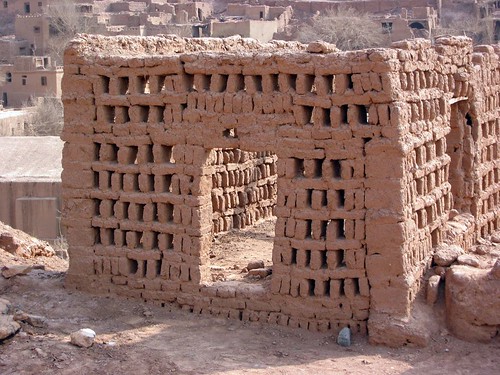
While in their own history, the Uyghur People successively taken on Shamanism, Manicheism, Buddhism and the Nestorianism before lastly changing to Islam when the Arab conquerors beat the Chinese in year 751 BC., thus beginning the way to the Islamization of the complete Central Asia.
Under the effect of the beliefs which they taken on, Uyghur People taken successively, and at times in a competing way, a large number of written forms (turco-runic, brahmi, tokharien, soghdien) before developing their own unique graphic system.
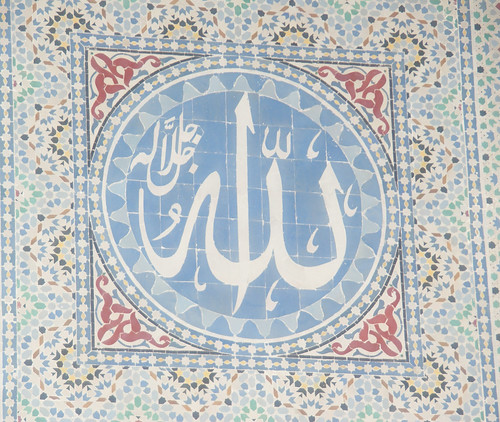
The arrival of Islam was a great change because it was supported by the assimilation of the Uyghur areas in the enormous Turkic and Muslim Kingdom. Thus, the descendants of Genghis Khan progressively replaced their writing by a Arabo-Persan alphabet, still used currently.
If their writing, their own language and their religion mark a real difference with the tradition of Chinese Han, Uyghur People also differ from their characteristic, so aspect of Central Asia's people. A shiny skin, eyes representing a whole pallet of colors, from black to deep blue, features pointing out to the Mongolian, Turkish or Uzbek roots of these men and these women.
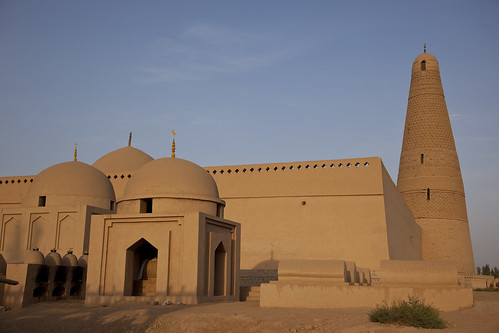
For a few years, China has included the proper identity of these remote people, although they represent only 9 million people - a trifle for this particular great country. So, the Uyghurs are now part of the fifty six ethnic minority groups having been well known in an official way by the People's Republic of China.
This statute allows these people a few rights in a land exactly where their difference is very often repressed. Therefore, Uyghur families escape the "single child policy" and their language is accepted as the second official language in Xinjiang.
The integration of the Uyghurs and their culture in the People's Republic of China, however, looks quite illusory. The presence of all natural sources in Xinjiang, and its area with countries acknowledged as sensitive, highly motivated the government to increase the sinicization of this area. Million of Han thus came to settle in this new Chinese eldorado, monopolizing the higher responsibility work opportunities.
In response to this true will to assimilate the Uyghurs into the Chinese culture, an independent party like East Turkistan Islamic Movement(ETIM) was born in the early 1990.
Asserting more freedom, but especially the acceptance of their true identity, this movement was seriously repressed by the power authorities in location Xinjiang.
The situations of September 11, 2001, were the perfect occasion for the Chinese government to justify true reprisals: they declared the "Uyghur freedom fighters" as dangerous terrorists linked to Al Quaida because of their Muslim origins and their proximity with Pakistan and Afghanistan... However, the terrible repression which followed did not calm down the anger. The Uyghur peoples population continues today to proudly maintain their identity and their culture , even though they become a minority on their own territory.
For more information about Uyghur people, you can visit a Uyghur website called Uyghur News at http://www.uyghurnews.com

No comments:
Post a Comment